The Digital Road Ahead
“Simply put, everything that can be digitized will be digitized.”
Kara Swisher, New York Times, Opinion, 3/22/19
Ten years ago, lastroadtofreedom was zealously published to create new conversations around Black experiences of America’s Civil War and African-American emancipation. Fresh conversations would include awareness of emergence of contraband (refugee) camps and the registers (logs) created at the camps.
Beginning in 2009 and continuing into the present, more than a dozen logs of African Americans living behind Union lines within occupied areas of the American South have been transcribed from their original forms and published on this site as part of the work of the Eaton-Bailey-Williams Freedpeople’s Digitization Project at Rust College (Holly Springs, Miss).
Our ancestors searched for freedom in the context of chattel slavery. For their descendants, paths to freedom include interpreting information (documents) the once enslaved left behind. Fighting for widespread access and publication of documents and the privileges of interpretation are, in my opinion, a final path or road to the ancestors’ freedom and ours.
Thousands of users have accessed the registers over a decade, and meaningful interactions between the site organizer, rhetorician-turned-lay historian Dr. Alisea Williams McLeod, and users have occurred. While the site has been devoted to publishing registers of African Americans as they entered the public record during the war, a diversity of people have found the records useful as resurrected camp experiences have pointed to peoples–white and black– who filled out the personnel of war departments.
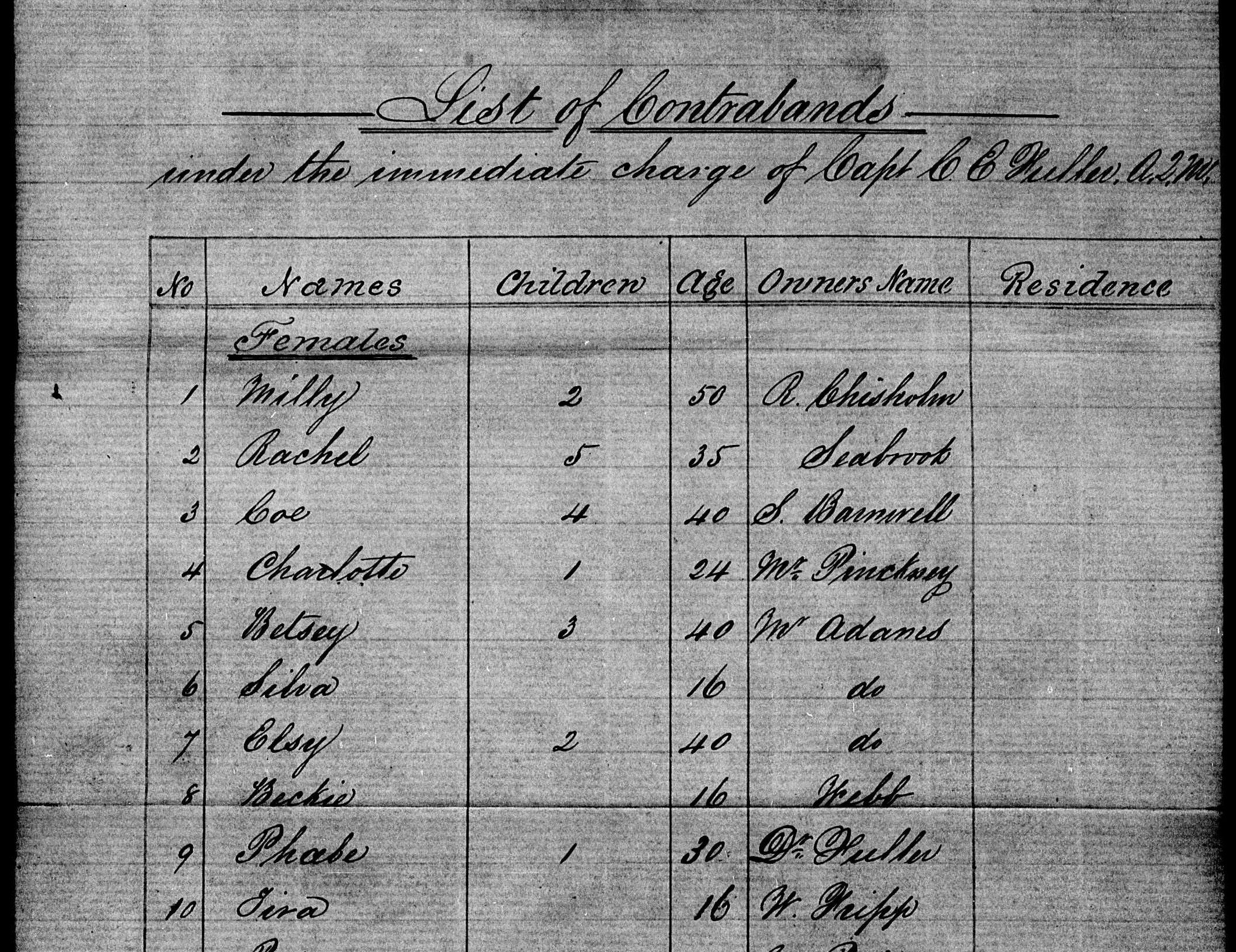
In short, the registers–many of which inform site users of the pre-war residence of formerly enslaved persons or of their former masters or mistresses–have proven invaluable to family historians and others seeking to discover and create untold narratives of America’s past. LastRoad intends to continue researching, transcribing, and digitizing this critical information as it unlocks heretofore closed doors to the past, but also because Dr. McLeod has recognized the digital era as the end of information innocence.
Sample Register
Contraband camp registers alone tweak American memory as they name former slaves and former slave owners for the first time in the form of camp logs, making the names indelible, etching them into the nation’s social, political, and economic histories. Made conspicuous within discourses of slavery, Civil War and Emancipation, the question becomes how Americans will respond to slavery’s new visibility in the digital era.
Memory and Morality in the Digital Age
Records constitute the collective memory of individuals and societies and…this memory is essential to those societies and the people in them.
James O’Toole, “Archives and Historical Accountability, Toward a Moral Theology”
We agree with O’Toole that records constitute the collective memory of individuals and societies while we recognize that the world is entering a new stage of information access relative to the Trans-Atlantic Slave Trade and movements to end it.
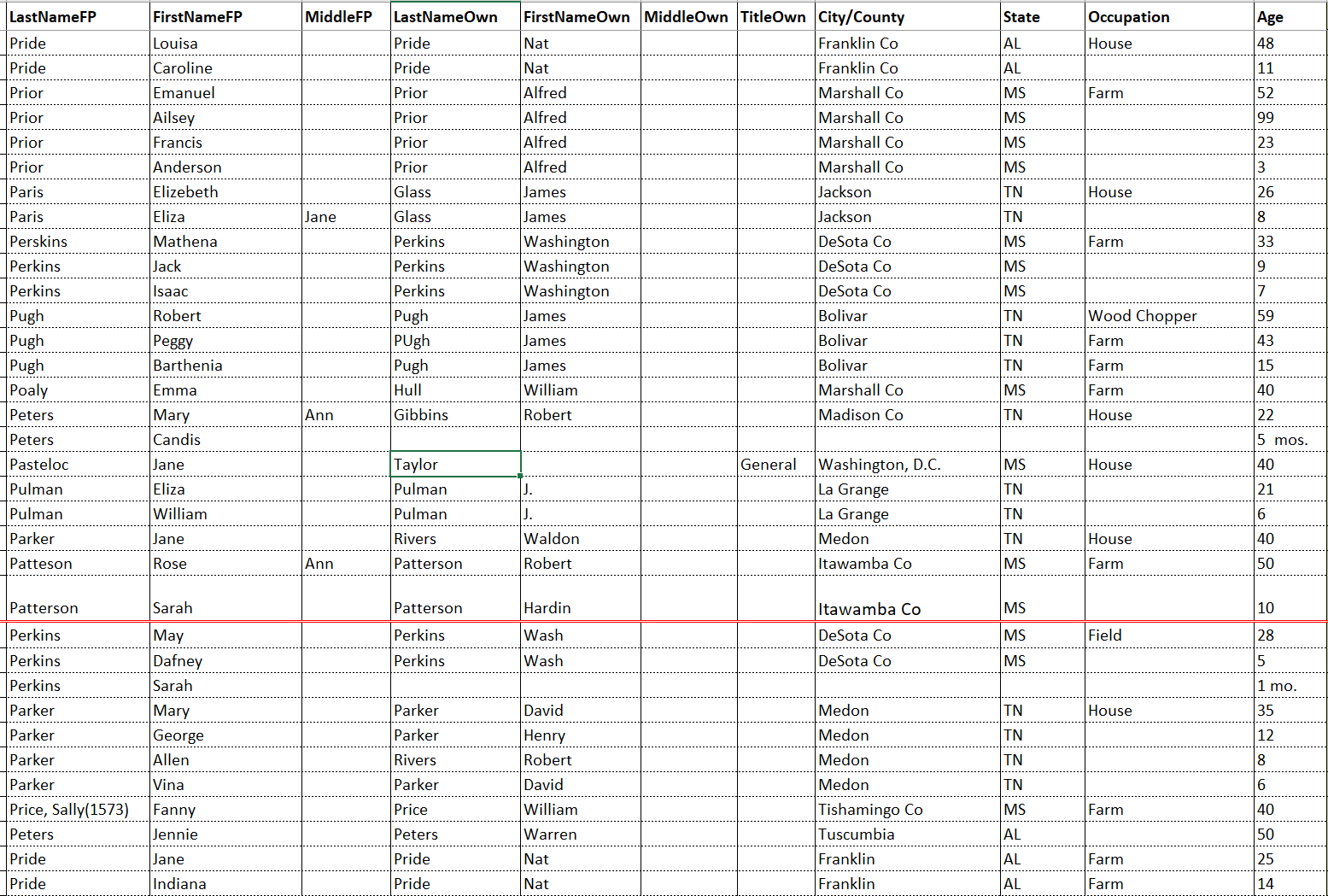
New voices will continually emerge from the public’s interaction with primary, historical documents, and, in turn, fresh new conversations will inform ways in which identity is able to be constructed. Digital justice–policies and practices that increase public access to information directly related to histories of people(s) joins with what James O’Toole has referred to as “a theology of the archives” is an answer to a moral question–of who gets to shape memory through (privileged) possession and interpretation of historical records. And, as O’Toole nudges us to ask–what relationship between digital information and historical accountability?
In the current year, we have joined with other researchers, digital humanists working in Civil War and emancipation studies, to make many more registers available to the public. As a part of this collaboration, made possible by an NEH (National Endowment for the Humanities) advancement grant, this site will in the coming year exhibit twenty or more registers created all over the Occupied South. LastRoad also will continue to exist as a place to advocate for expansion of digital histories and public access to them.
Archival Justice in the Digital Era
If tech journalist Kara Swisher is correct in her projection that “everything that can be digitized will be digitized,” then LastRoad considers it sound practice to anticipate and consider fully the relationship between access to documents that include personal, historical information, who will interpret the documents and to what purpose and whose benefit.
- Who will benefit from access to the names of former slaves and former slave owners for instance in the public record?
- What are the analogical implications, material conditions, to which access to digital information will give order?
- What implications for the creative?
- How will capital relate to emergence of new information around slavery, Civil War, and emancipation?
- Will museums and museum professionals, public historians, university historians continue as purveyors of historical narrative, or will social media play a growing role in creating new discourses around slavery and war?
In a site blog written by Dr. McLeod, we will take up these questions in various ways.
Finally, some nuts and bolts.
LastRoad users will continue to have access to a number of camp registers, including the Register of Freedmen (c. 1864, Camp Shiloh), highlighted soldiers’ service records, and related pension files. LastRoad is focused on interpretation of African-American wartime experience–what the records tell us.
We hope that you will visit our pages here to explore the lives of our many ancestors as they envisioned life after enslavement.
 Last Road to Freedom